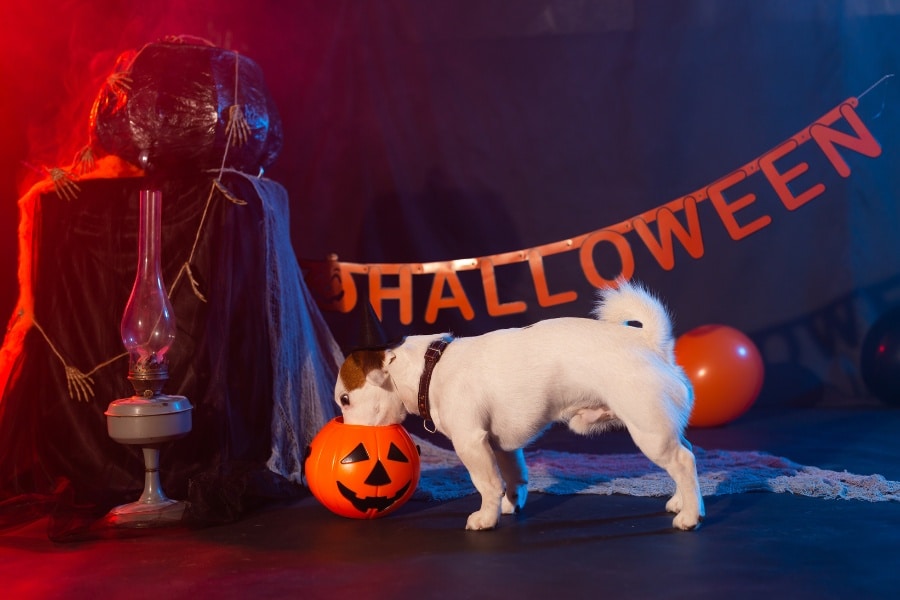
As carved pumpkins appear on porches across Charlotte, many pet owners wonder whether a nibble is harmless or risky. The answer depends on which part of the pumpkin your pet gets and how it was prepared. This guide to Halloween Pumpkin Safety explains what dogs and cats can eat, what to skip, how to train your pet for Halloween so decorations stay untouched, and when to call a veterinarian.
Halloween Pumpkin Safety: A Part-by-Part Guide
Plain pumpkin is one of the few fall foods that can be good for pets. It is rich in fiber and moisture, and a small amount can support healthy digestion. The key words are small amount. Too much can cause loose stools or an upset stomach, and cats, who are strict meat-eaters, may not want any at all.
Here is how each part of the pumpkin stacks up:
- Flesh (plain, cooked or raw): Generally safe in small portions. Cooked and mashed is the easiest on digestion.
- Canned pumpkin: Choose 100% plain pumpkin only. Pie filling contains sugar and spices, and some sweetened products may contain xylitol, which is highly toxic to dogs.
- Seeds: A few plain, unsalted, shelled seeds are usually fine for dogs, but they can upset the stomach and may be a problem for very small dogs and cats. Never share seeds roasted with salt, butter, oil, garlic, or onion.
- Stem: Skip it. The tough, woody stem can cause choking or an intestinal blockage.
- Skin and rind: Hard to digest, and swallowed chunks can cause stomach upset or a blockage.
- Leaves and vines: Prickly and fibrous, so keep pets away from them.
A good rule is to treat pumpkin as a topper, not a meal. A teaspoon or two for cats and small dogs, and a tablespoon or two for larger dogs, is a common starting point. If your pet has diabetes or a history of pancreatitis, check with your vet team first, since pumpkin adds carbohydrates and rich add-ins can trigger a pancreatitis flare.
Cats have different needs. Because they are strict meat-eaters, they don’t require pumpkin at all. If your cat is curious, offer a tiny taste of plain, cooked pumpkin, and skip anything seasoned or sweetened.
Pie Filling, Carved Pumpkins, and Other Hidden Hazards
Pumpkin pie, pumpkin bread, and spiced treats are far riskier than plain pumpkin. They often contain sugar, fat, and spices such as nutmeg, which can be harmful in larger amounts. Baked goods may also hide raisins, chocolate, or xylitol, so keep dessert plates out of reach.
Carved pumpkins deserve extra caution. Once cut, they spoil quickly, and a pumpkin sitting on a porch in Charlotte’s warm October weather can grow mold within days. Moldy food can cause vomiting and drooling, and in some cases tremors. Remove spoiled pumpkins promptly, and never let your pet chew a pumpkin that has been painted, glittered, or sprayed with bleach or preservatives.
Decorative gourds and mini pumpkins are meant for display, not for eating. Some ornamental varieties contain bitter compounds that can upset your pet’s stomach, so treat them as decor only.
Pumpkin decorations can create other problems inside the home. Open-flame candles can be knocked over by a wagging tail or a curious paw, so flameless candles are a safer choice. Just keep the small batteries secured, since button batteries are a serious swallowing danger. Place pumpkins on high, stable surfaces away from counter surfers and climbers.
Train Your Pet for Halloween: Leave It, Drop It, and Settle
Teaching a few simple cues now can prevent a lot of trouble later. If you want to train your pet for Halloween, start in a calm room well before October 31, and keep each session to about five minutes.
- Leave it: Hold a treat in a closed fist. When your pet stops sniffing and backs off, reward with a different treat from your other hand. Gradually move on to treats on the floor, then a plain pumpkin chunk, then decorations.
- Drop it: Offer a treat in trade for whatever is in your pet’s mouth. Never chase your pet or pry their mouth open.
- Settle: Reward your pet for lying calmly on a mat, away from pumpkins and decorations.
Plain pumpkin also makes a handy training reward. Spread a thin layer on a lick mat for a calm, happy distraction while you decorate. Cats can learn too, with short clicker sessions and tiny rewards, and since cats love to climb, keep pumpkins where they can’t reach.
Practice around decorations gradually. Set out one pumpkin at a time, reward calm behavior, then add more. Short, repeated practice builds reliable habits far better than one long session.
Supervise any pet near decorations. When you can’t watch closely, use a baby gate or a closed door so temptation never turns into a trip to the clinic.
When to Call a Veterinarian About Pumpkin Problems
A small piece of plain pumpkin may cause nothing more than soft stool. But call your vet team if vomiting or diarrhea lasts more than a day, or if your pet shows belly pain, bloating, drooling, low energy, loss of appetite, or straining. Repeated vomiting, trouble keeping water down, or a painful belly can point to a blockage and should not wait.
Get your pet seen right away if you suspect they ate anything with xylitol, a large piece of stem or rind, or a moldy pumpkin, especially if you notice tremors, weakness, collapse, seizures, or trouble breathing. Don’t try to make your pet vomit at home unless a vet tells you to.
When you call, share what your pet ate, how much, and when. If you have a package or recipe, bring it along. Your vet team may recommend an exam, X-rays, fluids, or monitoring, depending on what your pet swallowed and how they are feeling.
Conclusion: Enjoy the Season With a Safe Plan
Plain pumpkin can be a healthy treat in small amounts, but stems, skin, spoiled carvings, and pie-style add-ins should stay out of reach. Following Halloween Pumpkin Safety basics, and taking time to train your pet for Halloween with a few easy cues, will keep your home calm and your pet comfortable. This article offers general guidance and is not a substitute for a veterinary exam, so whenever you are unsure, ask a veterinarian.
At Rea Road Animal Hospital in Charlotte, our team is here to help you keep your pets healthy and safe through the fall season and beyond. If your pet has eaten something questionable, we are ready to help.
At Rea Road Animal Hospital in Charlotte, we are committed to keeping your pet healthy and safe with attentive, compassionate care. Schedule your pet’s visit today and give your pet the care they deserve.
Frequently Asked Questions
Q1. Can my dog or cat eat canned pumpkin every day?
Ans: Plain, 100% pumpkin in small amounts is generally fine for many pets, but daily feeding can lead to loose stools if the portion is too big. Pets with health conditions or on special diets should only have it with guidance from your vet team.
Q2. Is pumpkin a good home remedy for an upset tummy?
Ans: Some vets suggest plain pumpkin for mild constipation or soft stool, but it should never replace an exam. If your pet’s signs last longer than a day or two, or come with vomiting or low energy, schedule a visit.
Q3. Are pumpkin-flavored treats and drinks safe to share?
Ans: It is best to keep them to yourself. Pumpkin spice items often contain sugar, spices, dairy, caffeine, or xylitol, none of which are good for pets. Offer plain pumpkin instead.
Q4. Can pets be allergic to pumpkin?
Ans: It is uncommon, but possible. Itching, hives, facial swelling, vomiting, or diarrhea after eating pumpkin are signs to stop feeding it and call your vet team.
Q5. Should I see a veterinarian in Charlotte if my pet swallowed part of a pumpkin stem?
Ans: It is wise to call, even if your pet seems fine. Stem pieces can lodge in the digestive tract, and signs may not show up right away. Watch for vomiting, a painful belly, or loss of appetite, and let the clinic know what your pet ate.
Related Articles
New Furry Friends Welcome.
Schedule a Same-Day or Next Day Visit!